Basement Vapor Barriers in East Tennessee: Moisture-Proofing Before You Finish
Most of the advice online about putting a vapor barrier in a basement was written for colder climates, where the code calls for one on framed walls. Knox County sits in climate zone 4A, a mixed-humid zone, and the International Residential Code neither requires nor prohibits a vapor retarder on framed walls in that zone. The bigger risk for a Knoxville basement is warm, humid summer air reaching cool concrete and condensing behind a finished wall where nobody can see it.
Handle the water before you build the room. Make sure rain and groundwater are directed away from the foundation, test the walls and slab for moisture, and then insulate the walls with foam board that lets the concrete dry toward the room. Plastic sheeting stapled over basement walls usually does more harm than good, because it traps moisture against the wall.
This guide walks through what to check, in order, before any basement refinishing in Knoxville starts, so the finished space stays dry, comfortable and free of musty smells.
1. Why East Tennessee basements need their own approach
Concrete foundation walls and slabs stay cool for most of the year because they sit against the ground. In a heating-dominated climate, the main concern is warm indoor air in winter. In East Tennessee you get that in winter and also a long, humid summer, when outdoor air carries a lot of moisture. When that air reaches a cool surface, water condenses on it.
That is why a strategy copied from a northern how-to video can backfire here. A sheet of polyethylene on the room side of the wall can stop the wall from drying inward, and a cold, damp layer forms between the plastic and the concrete. Your local codes office sets the actual requirements for your permit, so treat this guide as a starting point for the conversation with your contractor, not a replacement for it.
2. Start outside: rainwater and drainage come first
Building Science Corporation's basement guidance puts it plainly: the most important strategies for keeping basements dry are groundwater and rainwater control. No interior product fixes a wall that is taking on bulk water.
Before anyone talks about insulation or drywall, walk the outside of the house after a heavy rain and look at:
Gutters and downspouts. Are gutters clear, and do downspouts discharge well away from the foundation instead of at its base?
Grading. Does the soil slope away from the house, or has it settled so water runs toward the walls?
Window wells. Do they have drainage, and do they fill with leaves or standing water?
Hardscape. Do patios, driveways or walkways tip toward the house?
Sorting these out first makes everything that happens inside more reliable.
3. Test the walls and slab before you frame
A simple plastic sheet test tells you a lot. Tape a square of clear plastic tightly to the foundation wall and another to the slab, seal all four edges, and leave them in place for a day or two.
Moisture under the plastic means water vapor is moving through the concrete from the ground side.
Moisture on top of the plastic means humid room air is condensing on a cool surface, which points to a humidity problem more than a foundation problem.
Dry on both sides is a good sign, though one test in one season is a snapshot, not a verdict. Repeat it in summer if you can.
While the walls are still open, it is also worth testing for radon. The EPA recommends that all homes be tested, regardless of which radon zone they are in, and a high result is easier to address while the walls are still open.
4. Where a vapor barrier helps and where it hurts
This is the part most homeowners get stuck on, and the forums are full of people who were told opposite things. Here is how the guidance from building science researchers breaks down.
Under the slab: helpful. On a new slab, sheet polyethylene placed directly under the concrete keeps ground moisture from wicking up. Most existing basements already have a slab, so this is mainly a question for additions or replaced floors.
On the inside of concrete walls: usually avoid. Building Science Corporation's basement guidance says no interior vapor barriers should be installed, so the wall can dry inward. Polyethylene behind drywall is the classic mistake. It looks like protection, but it can hold moisture against the framing and insulation, which is how mold ends up growing out of sight.
What tends to work instead:
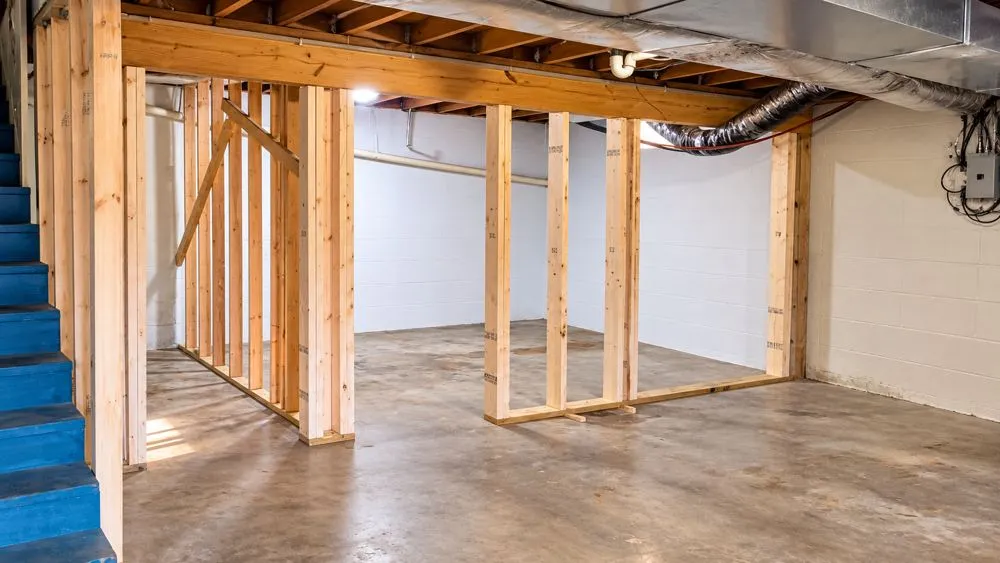
Rigid foam board fastened directly to the concrete, with the seams taped or sealed so room air cannot reach the cold wall
A capillary break at the bottom of the wall so the framing never sits on bare concrete
A stud wall built inside the foam, with no plastic sheeting on the room side
Moisture-tolerant materials near the floor, where any water would show up first
The right foam type and thickness depend on the wall, the code and the finish you want, which is why this belongs in the planning stage rather than on a shopping list.
What shapes the scope of moisture prep
The plastic sheet test and a walk around the house will tell you which side of this table your basement sits on. The more boxes on the right, the more work happens before finishing begins.
Factor | Lighter prep | Bigger prep |
|---|---|---|
Water history | Never had standing water | Water after heavy rain, or past flooding |
Outside drainage | Gutters clear, soil slopes away | Downspouts at the foundation, settled grading |
Wall condition | Clean, dry concrete | White powder, cracks, peeling paint, damp spots |
Slab | Dry under the plastic test | Damp under the plastic test |
Existing finishes | Unfinished space | Old drywall, carpet or paneling to remove |
Humidity | Dry air, no condensation on pipes | Musty smell, sweating pipes in summer |
Radon test | Low result | Result that calls for mitigation |
If you want to see how scope affects a full project, our post on basement remodeling cost covers the bigger picture.
5. Plan for humidity after the walls go up
Moisture-proofing does not end with the wall assembly. A finished basement still needs a way to keep summer humidity in check, whether that is the home's HVAC system, a dedicated dehumidifier, or both. Floor finishes matter too. Because a slab can only dry upward, Building Science Corporation advises against impermeable finishes such as sheet vinyl directly over it.
Layout plays a part as well. Rooms that share air with the rest of the house are easier to keep dry than small closed-off rooms with no supply air. If you are still deciding between an open plan and separate rooms, our guide to open and divided basement layouts is worth reading alongside this one.
6. Signs your basement is not ready to finish yet
A leaky basement in the Knoxville area usually announces itself after a heavy rain, but some signs are quieter. Look for:
Standing water or wet floor edges after storms
White, chalky residue on the concrete (efflorescence), which means water has moved through it
Musty or earthy smells that do not clear with airing out
Peeling paint or bubbling coatings on the walls
Rust on metal shelving legs, the water heater base or tool chests
Mold or mildew on boxes, furniture or stored clothing
Pipes or ductwork that sweat during summer
Any one of these is worth tracking down before framing. Finishing over them hides the problem, but it does not solve it.
7. Questions to ask before you book a basement finish
The answers tell you whether moisture is part of the plan or an afterthought.
How will you check this basement for moisture before work starts?
What goes against the concrete walls, and will there be any plastic sheeting on the room side?
How will the bottom of the wall be kept off the bare slab?
What flooring do you recommend over this slab, and why?
How will humidity be controlled in the finished space?
If you find signs of water, what happens next, and who handles drainage or waterproofing?
Who pulls the permit, and what inspections will the job need?
A contractor who answers these clearly is one you can compare fairly. Our guide on getting accurate remodeling quotes has more on comparing bids line by line.
Frequently asked questions
Can mold grow behind a vapor barrier? Yes. When polyethylene is installed on the room side of a basement wall, moisture coming through the concrete or condensing from room air can get trapped between the plastic and the wall. With no way to dry, that space can stay damp long enough for mold to grow out of sight. This is the main reason building science guidance recommends against interior plastic on basement walls.
Is a vapor barrier recommended for a basement concrete wall? Not in the form of plastic sheeting on the inside. The more common recommendation is rigid foam board against the concrete with sealed seams, which keeps room air off the cold wall while still letting it dry inward. A vapor barrier under a new slab is a different case and is generally recommended.
How much does it cost to vapor barrier a basement? It depends on what the basement needs. The biggest factors are whether water is getting in from outside, the condition of the walls and slab, how much old finish has to come out, and how humidity will be managed afterward. A site visit is the only way to get a real number for your home.
Do I need a vapor barrier in my basement in Tennessee? The International Residential Code requires a vapor retarder on the interior of framed walls in colder climate zones, but not in climate zone 4A, which includes Knox County. Your local codes office has the final say for your permit. In practice, the priorities here are controlling water, insulating with the right foam, and keeping humidity down.
Planning a basement finish?
MEL Realty Repairs refinishes basements in Knoxville, TN. If you are planning to finish yours, we are happy to talk through what you found in the checks above, including where a vapor barrier does and does not belong in your space. Learn more about our basement refinishing services, or contact us at (865) 432-7706.